

One of the most common assumptions in family law is that everyone pays their own legal costs. While this is often true, it is not absolute. In many circumstances, the Family Court has the power to order one party to pay some or all of the other party’s legal costs and those orders can be significant.
Understanding when costs may be ordered (and how to avoid them) is essential if you are involved in family law proceedings.
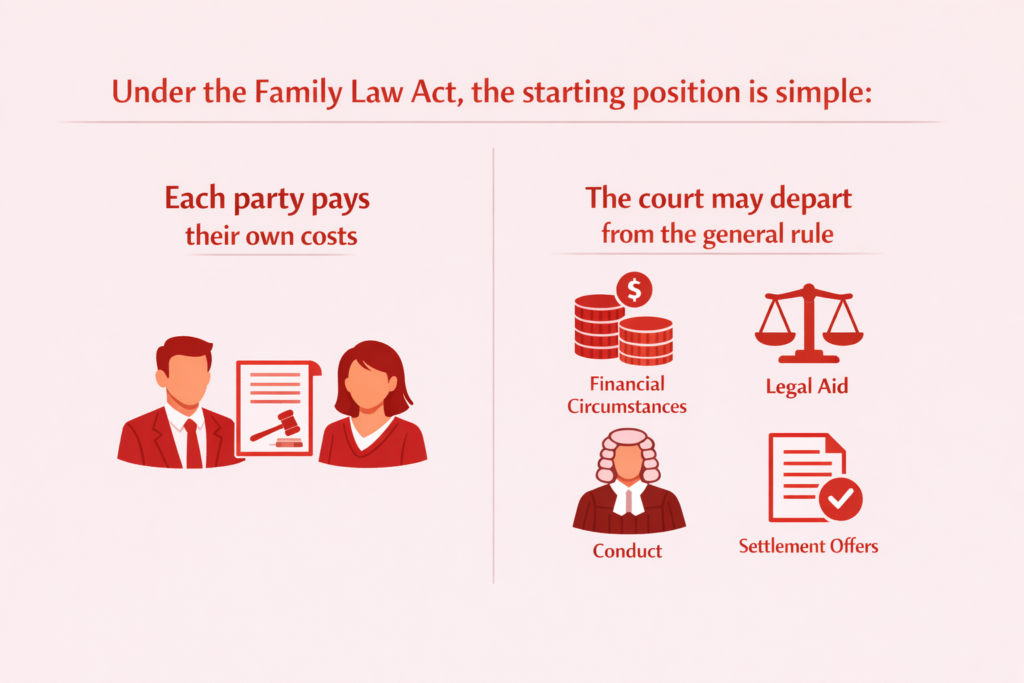 Under the Family Law Act, the starting position is simple:
Each party to family law proceedings is responsible for their own legal costs. This reflects the reality that family law matters often involve genuine disputes, emotional complexity, and unequal financial positions. The law recognises that people should generally be able to access the court without fear of automatic cost penalties.
However, this rule is subject to important exceptions.
The court may depart from the general rule if it believes there are circumstances that justify it. This decision is discretionary, meaning it is not automatic but it must be exercised judicially and fairly.
When deciding whether to make a costs order, the court will consider a range of factors, including:
In short, the court looks closely at fairness, reasonableness, and conduct.
If the court does decide to order costs, it can do so in different ways. The most common types are:
These are limited to amounts set out in the court rules and usually cover only the necessary or proper costs required to conduct the case. They rarely reflect the full legal bill.
These costs go further and include expenses the court considers were reasonably incurred and reasonable in amount. They are more substantial than party and party costs.
Indemnity costs are the most serious form of cost order. They cover almost all legal costs incurred, except those the court finds were unreasonable. Importantly, indemnity costs are exceptional and are not ordered lightly.
 The court may consider ordering indemnity costs where a case has been:
These orders are designed to discourage misuse of the court process and unnecessary litigation.
At James Noble Law, we take a strategic and practical approach to family law matters, with a strong focus on protecting our clients from unnecessary risk including adverse costs orders.
We can assist by:
Our mediation-first and resolution-focused approach often helps clients avoid costly litigation altogether, while still protecting their legal rights.
While family law usually follows the rule that each party pays their own costs, poor conduct, unreasonable positions, or unnecessary litigation can change that quickly. Understanding how costs orders work and getting the right advice early can make a significant difference to both your outcome and your financial position.
If you are involved in a family law dispute or considering court proceedings, speaking with an experienced family law team can help you move forward with clarity and confidence.
James Noble Law is here to guide you through your options and help you resolve your matter in a way that is practical, fair, and cost-effective. Contact us on 07 2112 3947 or book directly on our website at www.jamesnoblelaw.com.au
Need assistance? Contact James Noble Law today for a FREE 20-minute consultation and schedule a meeting with one of our qualified and experienced family lawyers in Brisbane.
Find Brisbane family lawyers on Google Maps near you.